-
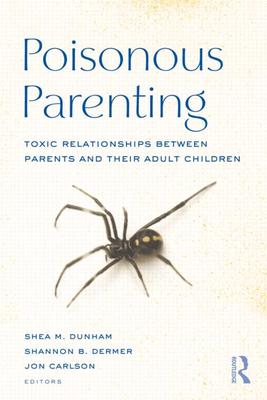
Poisonous Parenting: Toxic Relationships Between Parents and Their Adult Children
Shea M. Dunham, Shannon B. Dermer, and Jon Carlson
How does the toxicity associated with particular parenting styles affect attachment? How do the contaminated views of themselves that children of poisonous parents have affect their relationships into adulthood? Like physicians, clinicians do not want to amputate, but they sometimes find it necessary in order to preserve the health of the larger system. Poisonous Parenting shows clinicians how to recognize the effects of poisonous parenting in adult children and how to heal the scars created by parents' toxic attitudes and behaviors. Readers will come away from the book understanding ways to counteract the effects of poisonous parenting so that clients can recover and lead a healthy life. They'll also learn techniques for determining when a relationship can be salvaged, when to proceed with caution, and when to disconnect in order to keep the poison from spreading.
-
Cross Cultural Awareness and Social Justice in Counseling
Cyrus Marcellus Ellis and Jon Carlson
Many societal and cultural changes have taken place over the past several decades, almost all of which have had a significant effect on the mental health professions. Clinicians find themselves encountering clients from highly diverse backgrounds more and more often, increasing the need for a knowledge of cross-cultural competencies. Ellis and Carlson have brought together some of the leaders in the field of multicultural counseling to create a text for mental health professionals that not only addresses diversity but also emphasizes the counselor’s role as an advocate of social justice. The theoretical foundation for this book rests on research into diversity, spirituality, religion, and color-specific issues. Each chapter addresses the unique needs and relevant issues in working with a specific population, such as women, men, African Americans, Asian Americans, Spanish-speaking clients, North America’s indigenous people, members of the LGBT community, new citizens, and the poor, underserved, and underrepresented. Issues that enter into the counselor-patient relationship are discussed in detail for all of these groups, with the hope that this will lead to a greater understanding and sensitivity on the part of the counselor for their patients. This is an important and timely book for both counselors-in-training and those already established as professionals in today’s highly diverse and constantly-changing society.
-
Writing Training Materials That Work: How to Train Anyone to Do Anything
Wellesley Foshay, Ken Silber, and Michael B. Stelnicki
The explosion of e-learning has attracted huge numbers of practitioners to the field of instructional design (ID), many with little or no actual ID training. And most current texts fail to cover the substantial recent developments in the field. Writing Training Materials that Work is different. In it, the authors identify, synthesize, and summarize the most current best practices in ID. They offer new ways of teaching declarative knowledge (facts, concepts, and principles) and well- to ill- structured procedural knowledge (problem solving). Their recommendations are based on those principles in the cognitive learning and instruction literature that are internally consistent, prescriptive, and have been empirically demonstrated to make a cost-effective difference. The authors' approach is easy to implement and consistently gets results because it focuses on teaching deep understanding and problem-solving, allowing learners to generalize and transfer learning to new situations without re-training. Whether you re an experienced instructional design practitioner who wants to expand your skills or a graduate student in an advanced instructional design course, Writing Training Materials That Work will prove to be a readable, usable, and indispensable guide!
-
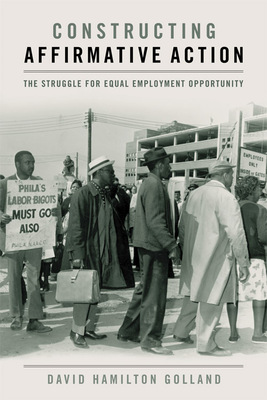
Constructing Affirmative Action: The Struggle for Equal Employment Opportunity
David H. Golland
Between 1965, when President Lyndon B. Johnson defined affirmative action as a legitimate federal goal, and 1972, when President Richard M. Nixon named one of affirmative action’s chief antagonists the head of the Department of Labor, government officials at all levels addressed racial economic inequality in earnest. Providing members of historically disadvantaged groups an equal chance at obtaining limited and competitive positions, affirmative action had the potential to alienate large numbers of white Americans, even those who had viewed school desegregation and voting rights in a positive light. Thus, affirmative action was—and continues to be—controversial. Novel in its approach and meticulously researched, David Hamilton Golland’s Constructing Affirmative Action: The Struggle for Equal Employment Opportunity bridges a sizeable gap in the literature on the history of affirmative action. Golland examines federal efforts to diversify the construction trades from the 1950s through the 1970s, offering valuable insights into the origins of affirmative action–related policy. Constructing Affirmative Action analyzes how community activism pushed the federal government to address issues of racial exclusion and marginalization in the construction industry with programs in key American cities.
-
Queer Praxis: Questions for LGBTQ Worldmaking
Dustin Bradley Goltz and Jason Zingsheim
Amidst rapid advances of mainstream gay and lesbian platforms, questions of essential sexual identities, queered rituals of family, queered notions of intimacy, queer considerations of time, and the possibility and value of queered systems of relation are largely absent. Resisting the public face of a normative and homogenous gay and lesbian community, and embracing a broadened conception of queerness, this book brings together 29 writers – a diverse community of scholars, lovers, and activists – to explore queer theory and embodied experiences within interpersonal relations and society at large. Enacting a critical intervention into the queer theoretical landscape, the book offers an alternative engagement where contributors centralize lived experience. Theoretical engagements are generated in relation and in dialogue with one another exploring collectivity, multiple points of entrance, and the living nature of critical theory. Readers gain familiarity with key concepts in queer thought, but also observe how these ideas can be navigated and negotiated in the social world. Queer Praxis serves as a model for queer relationality, enlisting transnational feminist, critical communication, and performance studies approaches to build dialogue across and through differing subjectivities.
-
Pathology for the Physical Therapist Assistant
Catherine C. Goodman, Kenda S. Fuller, and Roberta K. O'Shea
No other textbook provides coverage of the essential concepts of disease processes and disorders with the specific needs of the physical therapy assistant in mind. Pathology for the Physical Therapist Assistant provides coverage of disease processes and systemic disorders as well as guidelines, precautions, and contraindications for physical therapy interventions. Catherine Goodman, Kenda Fuller, and Robbie O’Shea share their expertise in a consistent, well-organized approach that defines each disorder, describes the appropriate physical therapy assessment and intervention, and rounds out the discussion with relevant case study examples based on established practice patterns.
-
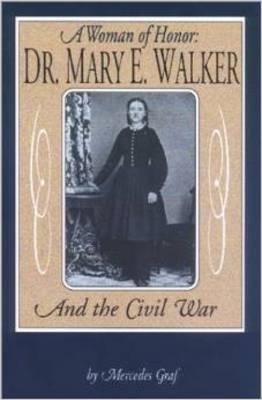
A Woman of Honor: Dr. Mary E. Walker and the Civil War
Mercedes Graf
Mercedes Graf presents Dr. Mary E. Walker's life with the Union Army as a surgeon, her imprisonment, and her subsequent efforts to comfort families on both sides. Dr. Walker's story is especially unique in that she received the Medal of Honor.
-
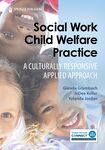
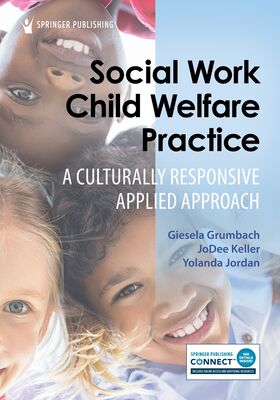
Social Work Child Welfare Practice: A Culturally Responsive Applied Approach
Giesela Grumbach, JoDee Keller, and Yolanda Jordan
With the aim of transforming flawed child welfare practices and policies into a more equitable system, this comprehensive, practice-based text delves into contemporary child welfare practice from antiracist, social justice, and decolonial perspectives. Incorporating first-hand knowledge of day-to-day practice, the book examines the many roles of professional child welfare workers, foundational skills they need to work in the field, the challenges and promises of trauma-informed practice, how to maintain a dedicated workforce, and strategies for reshaping the system. This book covers child welfare practice thoroughly, from reporting to investigating and everything in between. It also explores relevant policies, signs of abuse/neglect, building relationships, anti-racist approaches, and the importance of cultural sensitivity. Throughout, it emphasizes the trauma experienced by children and families involved in the system and the impact on child welfare professionals. Learning objectives, reflection boxes, discussion questions, and additional resources are included in every chapter to provide opportunities for students to apply concepts. Additionally, case studies in most chapters offer practical applications to real-world situations. To accompany the book, qualified instructors have access to an Instructor Manual, Sample Syllabus, Test Bank, chapter PowerPoints, and supplemental videos covering topics such as careers, engagement, and foster care.
-
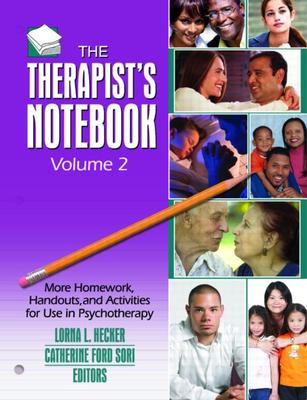
The Therapist's Notebook, Volume 2: More Homework, Handouts and Activities for Use in Psychotherapy
Lorna L. Hecker and Catherine Ford Sori
The Therapist’s Notebook, Volume 2: More Homework, Handouts, and Activities for Use in Psychotherapy, is the updated classic that provides mental health clinicians with hands-on tools to use in daily practice. This essential resource includes helpful homework assignments, reproducible handouts, and activities and interventions that can be applied to a wide variety of clients and client problems. Useful case studies illustrate how the activities can be effectively applied. Each expert contributor employs a consistent chapter format, making finding the ’right’ activity easy. The Therapist’s Notebook, Volume 2: More Homework, Handouts, and Activities for Use in Psychotherapy, includes innovative field-tested activities to assist therapists in a wide range of applications, including adults, children, adolescents and families, couples, group work, trauma/abuse recovery, divorce and stepfamily issues, and spirituality. Format for each chapter follow by type of contribution (activity, handout, and/or homework for clients and guidance for clinicians in utilizing the activities or interventions), objectives, rationale for use, instructions, brief vignette, suggestions for follow-up, and contraindications. Three different reference sections include references, professional readings and resources, and bibliotherapy sources for the client. Various theoretical perspectives are presented in The Therapist’s Notebook, Volume 2: More Homework, Handouts, and Activities for Use in Psychotherapy, including: cognitive behavioral narrative therapy solution focus choice theory and reality therapy REBT strategic family therapy experiential art and play therapies couples approaches including Gottman and Emotionally Focused Therapy medical family therapy Jungian family-of-origin therapy adventure-based therapy
-
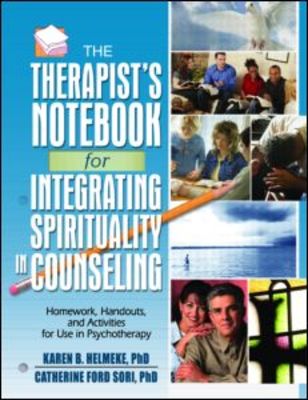
The Therapist's Notebook for Integrating Spirituality in Counseling I: Homework, Handouts, and Activities for Use in Psychotherapy
Karen B. Helmeke and Catherine Ford Sori
Learn to initiate the integration of your clients’ spirituality as an effective practical intervention. A client’s spiritual and religious beliefs can be an effective springboard for productive therapy. How can a therapist sensitively prepare for the task? The Therapist’s Notebook for Integrating Spirituality in Counseling is the first volume of a comprehensive two-volume resource that provides practical interventions from a wide range of backgrounds and theoretical perspectives. This volume helps prepare clinicians to undertake and initiate the integration of spirituality in therapy with clients and provides easy-to-follow examples. The book provides a helpful starting point to address a broad range of topics and problems. The chapters of The Therapist’s Notebook for Integrating Spirituality in Counseling are grouped into five sections: Therapist Preparation and Professional Development; Assessment of Spirituality; Integrating Spirituality in Couples Therapy; Specific Techniques and/or Topics Used in Integrating Spirituality; and Use of Scripture, Prayer, and Other Spiritual Practices. Designed to be clinician-friendly, each chapter also includes sections on resources where counselors can learn more about the topic or technique used in the chapter—as well as suggested books, articles, chapters, videos, and Web sites to recommend to clients. Each chapter utilizes similar formatting to remain clear and easy-to-follow that includes objectives, rationale for use, instructions, brief vignette, suggestions for follow-up, contraindications, references, professional readings and resources, and bibliotherapy sources for the client.
-
The Therapist's Notebook for Integrating Spirituality in Counseling II: More Homework, Handouts, and Activities for Use in Psychotherapy
Karen B. Helmeke and Catherine Ford Sori
More activities to tap into the strength of your clients’ spiritual beliefs to achieve therapeutic goals. The Therapist’s Notebook for Integrating Spirituality in Counseling II is the second volume of a comprehensive two-volume resource that provides practical interventions from respected experts from a wide range of backgrounds and theoretical perspectives. This volume includes several practical strategies and techniques to easily incorporate spirituality into psychotherapy. You’ll find in-session activities, homework assignments, and client and therapist handouts that utilize a variety of therapeutic models and techniques and address a broad range of topics and problems.
-
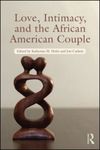
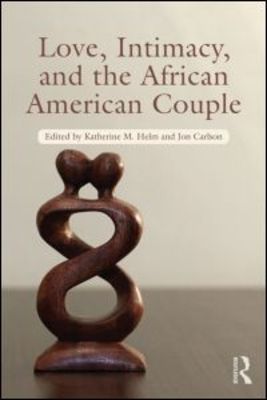
Love, Intimacy, and the African American Couple
Katherine M. Helm and Jon Carlson
This exciting new text on counseling African American couples outlines critical components to providing culturally-sensitive treatment. Built around a framework that examines African American couples’ issues as well as the specific contextual factors that can negatively impact their relationships, it: • Addresses threats to love and intimacy for Black couples • Provides culturally relevant, strengths-based approaches and assessment practices • Includes interesting case studies at the conclusion of each chapter that illustrate important concepts. The chapters span the current state of couple relationships; readers will find information for working with lesbians and gays in relationships, pastoral counseling, and intercultural Black couples. There is also a chapter for non-Black therapists who work with Black clients. Dispersed throughout the book are interviews with prominent African American couples’ experts: Dr. Chalandra Bryant, relationship expert Audrey B. Chapman, Dr. Daryl Rowe and Dr. Sandra Lyons-Rowe, and Dr. Thomas Parham. They provide personal insight on issues such as the strengths African Americans bring to relationships, their skills and struggles, and gender and class considerations. This must-read book will significantly help you and your clients
-
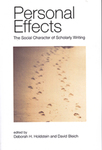
Personal Effects: The Social Character of Scholarly Writing
Deborah H. Holdstein and David Bleich
In Personal Effects, Holdstein and Bleich compile a volume that cuts across the grain of current orthodoxy. These editors and contributors argue that it is fundamental in humanistic scholarship to take account of the personal and collective experiences of scholars, researchers, critics, and teachers. They contend that humanistic inquiry cannot develop successfully at this time without reference to the varieties of subjective, intersubjective, and collective experience of teachers and researchers. In composition studies, they point out, an important strand of theory has continuously mined the personal experience of individual writers ("where they stand" even in a destabilized sense of that idea). "[S]uch substantive accounts of the 'inner' academic life provide appropriate and rich contexts for further study and analysis." With this volume, then, these scholars move us to explore the intersections of the social with subjectivity, with voice, ideology, and culture, and to consider the roles of these in the work of academics who study writing and literature. Taken together, the essays in this collection carry forward the idea that the personal, the candidly subjective and intersubjective, must be part of the subject of study in humanities scholarship. They propose an understanding of the personal in scholarship that is more helpful because more clearly anchored in human experience.
-
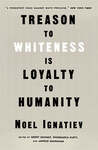
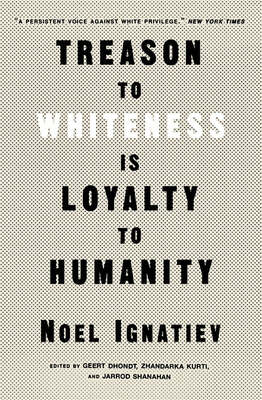
Treason to Whiteness is Loyalty to Humanity by Noel Ignatiev
Noel Ignatiev, Geert Dhondt (ed.), Zhandarka Kurti (ed.), and Jarrod Shanahan (ed.)
For sixty years, Noel Ignatiev provided an unflinching account of “whiteness” — a social fiction and an unmitigated disaster for all working-class people. This new essay collection from the late firebrand covers the breadth of his life and insights as an autodidact steel worker, a groundbreaking theoretician, and a bitter enemy of racists everywhere.
In these essays, Ignatiev confronts the Weather Underground and recounts which strategies proved most effective to winning white workers in Gary, Indiana, to black liberation. He discovers the prescient political insights of the nineteenth-century abolition movement, surveys the wreckage of the revolutionary twentieth century with C.L.R. James, and attends to the thorny and contradictory nature of working-class consciousness. Through it all, our attentions are turned to the everyday life of “ordinary” people, whose actions anticipate a wholly new society they have not yet recognized or named.
In short, Ignatiev reflects on the incisive questions of his time and ours: How can we drive back the forces of racism in society? How can the so-called “white” working class be won over to emancipatory politics? How can we build a new human community? -
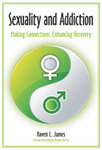
Sexuality and Addiction: Making Connections, Enhancing Recovery
Raven Lynn James
This book provides an understanding of how sexuality and addiction are intertwined, helping those who counsel substance abusers and individuals who have experienced negative sexual messages or experiences to improve their sexual health and enjoyment.
This book presents a broad overview of sexual health issues that documents the links between sexuality and substance abuse, and describes how counselors can help individuals who have been impacted by negative sexual experiences can find a way out of the pain that leads them to addiction or back to substance abuse. Using the sexual health model as a framework for discussion, author Raven L. James, PhD, explains how sexual health and substance abuse are often connected, provides examples of real-life experiences, and identifies issues to consider in adopting healthier attitudes and sexual behaviors as well as effective methods for achieving them.
Each chapter provides focused content followed by an explanation of the subject's connection to substance abuse. Tips for counselors, sample lesson plans and ideas, tangible tools to use in sexual health groups, and related resources area also included. Whether the reader is personally afflicted, a helper, or a loved one, the information in Sexuality and Addiction: Making Connections, Enhancing Recovery will provide a new perspective on how to help clients improve their sexual self-esteem, find ways to improve sexual relationships with themselves and others, and most of all, to restore hope for sexual health in recovery. -
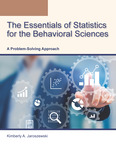
Essentials of Statistics for the Behavioral Sciences: A Problem-Solving Approach
Kimberly A. Jaroszewski
Written for students studying in a variety of social and health science areas, The Essentials of Behavioral Statistics: A Problem-Solving Approach is designed to give each student a conceptual understanding of the basic statistical procedures used in behavioral sciences, as well as the computational skills to carry them out and embed statistics in the research process. It separates out what type of questions that each type of statistic can address and provides instructions on completing the analysis manually or with the assistance of SPSS Statistical Software®.
-

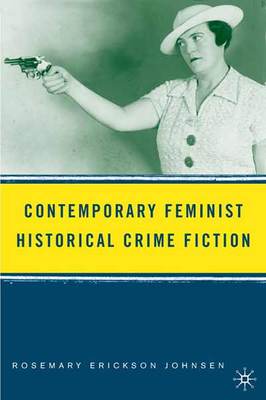
Contemporary Feminist Historical Crime Fiction
Rosemary Erickson Johnsen
By examining the feminist interventions of contemporary women writers working in this subgenre, Johnsen advances the existing critical discussion of women's crime fiction. The writers studied here bring research expertise to bear on their chosen historical settings, creating a powerful but widely accessible statement about women in history.
-

The Death Penalty in Focus: A Special Topics Anthology
Vincent R. Jones and James R. Coldren, Jr.
The death penalty is one of the most debated issues in America. Should we abolish the sanction? Is it used often enough? Does the death penalty deter crime? Does it cost more to execute or incarcerate for life? These are a few of the questions that continuously fuel the debate. This anthology highlights several important issues in the death penalty debate and takes a reasoned approach, presenting relevant facts and prevailing opinions in an unbiased manner. The death penalty debate touches on nearly every aspect of the justice administration: crime investigation, forensics, evidence, interrogations, prosecutorial decision-making, public defender systems, judicial education, post-conviction appeal processes, and more. Each chapter presents studies or commentaries that take distinctly different positions, or that present different perspectives, or different data, on the same issue. The articles will challenge student readers regarding their understanding of the facts, the variety of opinions, the volume of information available, and the sophistication of the research methodologies.
-
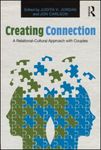
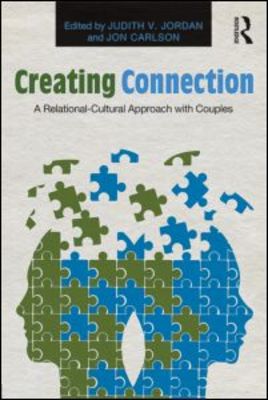
Creating Connection: A Relational-Cultural Approach with Couples
Judith V. Jordan and Jon Carlson
Relational-Cultural Theory (RCT) posits that people grow through and toward relationship throughout the lifespan. Rather than emphasizing movement toward autonomy and self-sufficiency, it focuses on the power of connection in people’s lives. Culture and power are seen as formative in individual and social development. As a model, RCT is ideal for work with couples: it encourages active participation in relationships, fosters the well-being of everyone involved, and provides guidelines for working with disconnections and building relational resilience. Creating Connection helps readers to understand the pain of disconnection and to use RCT to heal relationships in a variety of settings, including with heterosexual couples, stepparents, lesbian and gay couples, and mixed race couples. In addition to an emphasis on helping couples find authentic connection, RCT points to the need for changing the cultural conditions that contribute to the problems of disconnection. Polarities of “you vs. me” will be replaced with the healing concept of “us.”
-
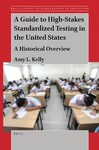
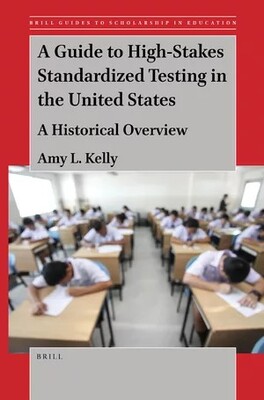
A Guide to High-Stakes Standardized Testing in the United States: A Historical Overview
Amy Kelly
High-stakes standardized testing has a long history of exclusion, oppression, power, and control with deep roots in the landscape of American education. In this text, the events and circumstances that have forged the way of high-stakes testing are presented in a straightforward and accessible manner.
This history is essential to understanding our current realities of testing in the United States especially as they relate to marginalization and control of certain populations. Furthermore, a historical perspective provides a lens to consider high-stakes standardized testing critically; to unpack the purposes, benefits, and damages of this practice. -
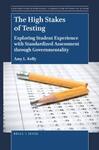
The High Stakes of Testing: Exploring Student Experience with Standardized Assessment through Governmentality
Amy Kelly
Standardized assessments have long been part of the educative experience for students around the world. The high-stakes nature of these tests can have damaging and enduring effects for public school systems, particularly the youth. With the adoption of Common Core State Standards and mandated state-wide accountability measures, high-stakes tests, like the PARCC, gained quick and controversial notoriety.
The high-stakes discourse has been dominated by politicians, educators, and parents. Notably absent from this dialogue are the voices of those whom are impacted the most: students. Largely influenced by Critical Pedagogy, this research sheds light on the negative, punitive, and often arbitrary nature of testing in schools. The paramount intention of this publication is to raise awareness of student experiences and perspectives of standardized testing.
The High Stakes of Testing analyzes the experiences, relationships, thoughts, ideas, and opinions students have with standardized assessment measures. Interviews with seven students in Grades 3, 5, and 8 are examined through a governmentality lens to reveal the ways in which the youth are manipulated, regulated, and disciplined to view standardized testing as a natural part of what it means to be a public-school student. It is only when we can begin to see and appreciate how our youth interact with the omnipresent testing in our public schools can we begin to envision changing these accountability practices.
The Faculty Bookshelf showcases books that have been authored or edited by Governors State University faculty. These works may be published externally, or are also available on OPUS.
Printing is not supported at the primary Gallery Thumbnail page. Please first navigate to a specific Image before printing.
![Corporate Risk-management [Корпоративный риск-менеджмент] by Natalia Ermasova and S. Ermasova](https://opus.govst.edu/fac/1196/thumbnail.jpg "Corporate Risk-management [Корпоративный риск-менеджмент] by Natalia Ermasova and S. Ermasova")